
How to get more Google reviews without being weird about it

Alex AndersonFounder, Cultre
- PublishedNov 6, 2026
- Read8 min
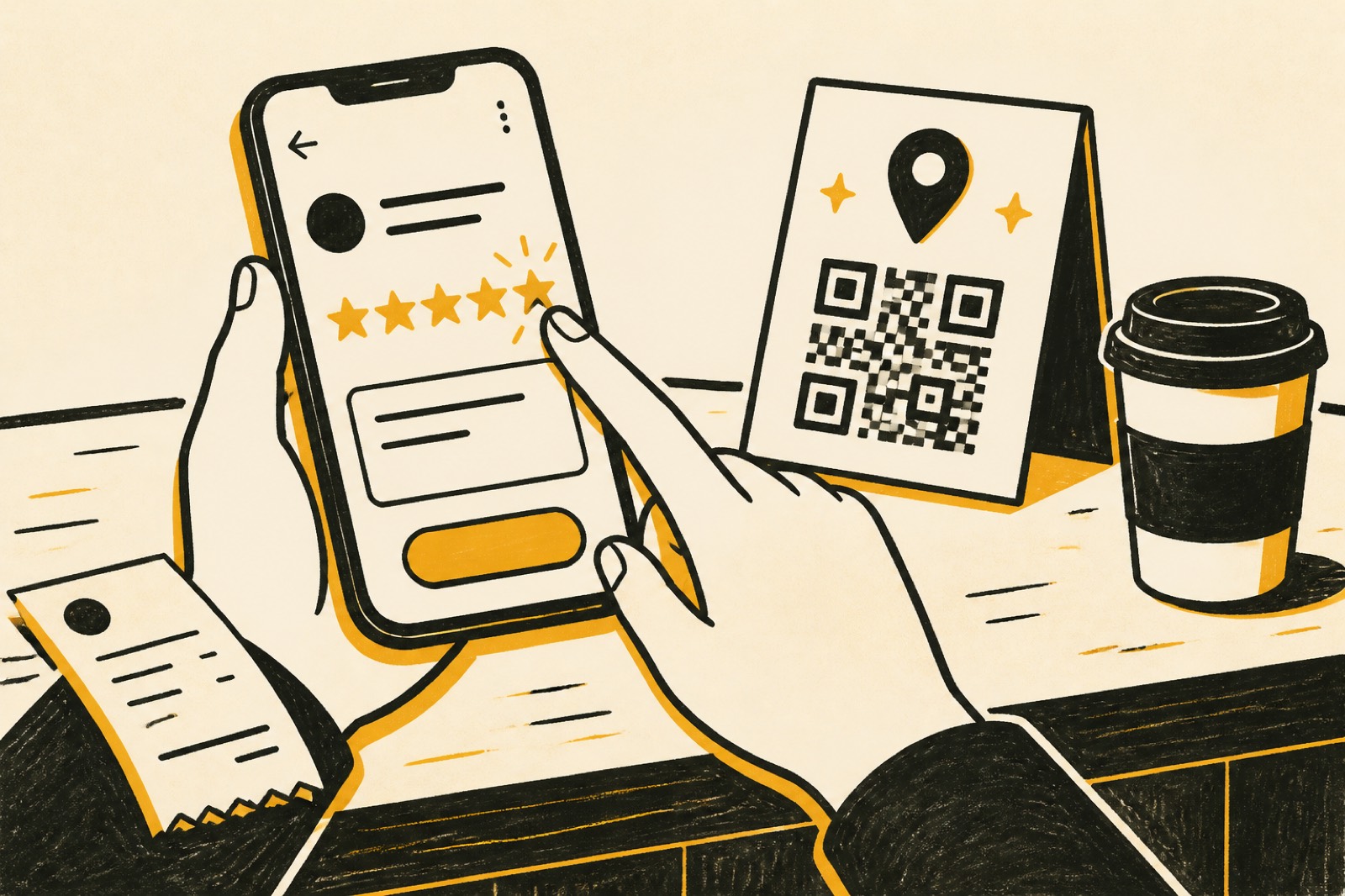
To get more Google reviews, ask every customer, in person, right after the moment they're happiest, and hand them a one-tap link or QR code that opens the review form. Then reply to every review so the next customer sees someone is listening. Don't offer rewards or only ask the happy ones: Google's rules ban both. Most businesses don't need a trick. They need a habit.
Why great businesses still have so few reviews
A Redding HVAC company finishes a Saturday AC repair in July. It's 108 degrees outside and the customer is so relieved they offer the tech a cold drink and say "you saved our weekend." The tech says thanks, packs up and drives to the next call. Nobody mentions a review. Three weeks later the office sends a generic email, the customer has forgotten the tech's name, and the email sits unopened. (The company is a composite. We'd rather not hold up a real neighbor as the "before" picture.)
That's the whole problem in one afternoon. Happy customers rarely leave reviews on their own. They got what they paid for and moved on with their day. An unhappy customer has a reason to open the app. So a profile left to chance drifts toward whoever was most annoyed that month.
Think of it like a tip jar. People tip far more when the jar is right there at the register, when they're still enjoying the moment, and when a few bills are already sitting in it. Hide the jar in the back room and ask by email next week, and even the people who loved you won't bother. Reviews work the same way: visibility, timing and a little social proof.
Do Google reviews actually help you show up on Maps?
Yes, and Google says so directly. Its page on how local results are ranked lists prominence, meaning how well known a business is, as one of the three main factors, and notes that "more reviews and positive ratings can help your business's local ranking." The same page recommends replying to reviews.
Reviews also do a second job that's easy to underrate. They're the sales page a customer reads before they ever click to your website. A Shasta County homeowner comparing three roofers will skim the newest five reviews on each, and the replies, before picking up the phone. And as Google moves questions on profiles over to an AI feature that answers from your profile and reviews, what customers say about you becomes part of how you're described.
For the bigger picture on local ranking, start with our pillar on local SEO in Redding. This article is about the one lever you control almost completely: the ask.
What are you allowed to do when asking for reviews?
Two sets of rules apply here, and both are clear.
Google's rules. Google's contributed content policy bans reviews posted "due to an incentive offered by a business," whether that's payment, discounts or free services. It also says businesses may not "discourage or prohibit negative reviews, or selectively solicit positive reviews from customers," and may not set review quotas for staff. That last one surprises people. A bonus for the tech who collects the most reviews is exactly what the policy describes.
The FTC's rules. The Federal Trade Commission's final rule on fake reviews, announced in August 2024, bans buying or writing fake reviews and using threats or intimidation to suppress negative ones. Google's own policy is stricter on incentives, so follow Google's.
Here's what's allowed and what isn't, in one place.
| Fine | Not fine |
|---|---|
| Asking every customer for an honest review | Asking only the customers you know are happy |
| A link or QR code that opens your review form (Google's tips on getting reviews suggest exactly this) | A discount, gift card or entry into a drawing in exchange for a review |
| Reminding a customer once if they said yes | Asking employees, family or friends to post reviews |
| Replying to every review, including the bad ones | A "rate us 1–5 first" screen that only sends 4s and 5s to Google |
| Thanking the team when reviews mention them by name | Quotas or bonuses tied to review counts |
That "rate us first" screen is called review gating, and plenty of review software still offers it. Turn it off. It's the fastest way to turn a reputation asset into a liability.
The Review Flywheel: our four-part routine
A flywheel is heavy to start and easy to keep spinning. Here's the routine we set up for local businesses. None of the parts is clever. The trick is doing all four every time.
- Pick the moment. Find the point in your service when the customer is most relieved or delighted, and attach the ask to that moment. For a med spa it's the mirror check at the end of an appointment. For a contractor it's the final walkthrough. For a restaurant it's when the check comes back with a "how was everything?" that got a real smile. (This is putting the tip jar at the register.)
- Make the method one tap. Get your review link from your Business Profile (the "Ask for reviews" or "Get more reviews" option) and put it everywhere the moment happens: a text template, a QR code on a counter card, a line on the invoice, the email signature. If the customer has to search for you on Maps and scroll to the reviews tab, you've lost most of them.
- Say it like a person. The ask should be short, specific and honest. "Would you mind leaving us a quick Google review? It really helps a small local business, and it helps people around Redding find us." Then send the link while you're still standing there. A text that arrives while they're still in the driveway works far better than one that arrives Thursday.
- Reply, every time. Thank happy reviewers by name and mention the job. Answer a bad review once, calmly, and offer to fix it offline. The replies are for the next customer reading, not just the one who wrote it. (A few bills already in the jar.)
Then repeat. A business that finishes two or three jobs a day and asks every customer will see a steady trickle instead of the occasional burst, and a trickle is what keeps the newest reviews recent.
How to ask without it feeling awkward
Most owners don't skip the ask because they're lazy. They skip it because it feels like begging. Three shifts help.
Ask for help, not praise. "It helps us a lot" is easier to say and to hear than "please give us five stars." It's also within the rules, because you're not steering the rating.
Hand the job to whoever owns the moment. The owner doesn't need to ask everyone. The tech at the final walkthrough, the hygienist at checkout, the server with the check: they're the ones the customer just thanked. Give them the text template and the counter card, and make the ask part of how the job ends, without counting who collects the most.
Make it local. Redding runs on word of mouth, from neighbors to the Facebook groups where half the town asks for referrals. A review is the same word of mouth, written down where strangers can find it. Most customers in a smaller market like that framing, because they want good local businesses to survive.
What about the bad reviews?
They'll come. A profile with 140 reviews and a 4.7 average often reads as more trustworthy than one with 12 perfect fives, because it looks real.
When a bad one lands, wait an hour, then reply once. Acknowledge the problem, don't argue the details in public, and give a name and a phone number to sort it out. If a review breaks Google's policy (it's fake, off-topic, or from someone who was never a customer), you can report it from your profile, but don't count on it coming down quickly.
What you shouldn't do is chase the bad ones away by only asking the good ones. Asking everyone is both the rule and the best defense: the more honest reviews you collect, the less any single unfair one matters.
How many reviews do you need?
There's no magic number, and anyone who quotes one is guessing. A better yardstick: look at the three businesses that show up in the map pack when you search your main service in Redding. Note their review counts, their average rating and how recent the newest reviews are. That's your real competition, and it differs by trade. A Redding dentist might be up against profiles with hundreds of reviews, while a niche specialty contractor might lead with a few dozen.
Then track your own numbers once a month alongside your other profile stats, which our 20-minute monthly Google Business Profile checklist covers. If you're asking every customer and the count still isn't moving, look at whether the link actually works on a phone and whether staff are really making the ask.
If you have plenty of reviews but still don't show up, the issue is probably elsewhere. Our guide to why your business isn't showing on Google Maps walks through the other causes.
Questions people ask next.
Can I offer a discount or giveaway for Google reviews?
No. Google's policy bans reviews posted because a business offered an incentive, including discounts, free services or gifts, and those reviews can be removed. Ask for honest reviews and leave rewards out of it.
Is it OK to text customers a review link?
Yes. Sending a link or QR code that opens your review form is one of the methods Google suggests. Send it soon after the job while the experience is fresh, and don't send more than one follow-up.
Should I only ask my happiest customers for reviews?
No. Google's policy specifically bans selectively soliciting positive reviews. Ask everyone, and use the bad reviews as a chance to show future customers how you handle problems.
Can I respond to Google reviews, and does it help?
Yes, you can reply to every review from your Business Profile, and Google recommends it. Replies show you're paying attention, and they're often what the next customer reads to decide whether to call you.
How do I find my Google review link?
Open your Business Profile while signed in and look for the "Ask for reviews" or "Get more reviews" option. It gives you a short link and a QR code you can copy into text messages, emails, invoices and printed cards.
We're a Redding team, and we set up review routines like this for local businesses, from the link and the counter card to the reply templates. If you'd like a hand, book a 30-minute call with Alex.
Founder of Cultre in Redding, California. Fifteen years building marketing for software companies and local businesses, and the one who'll be on your call.
Alex