

Marketing for Redding home service companies: referrals to pipeline

Alex AndersonFounder, Cultre
- PublishedOct 28, 2026
- Read10 min
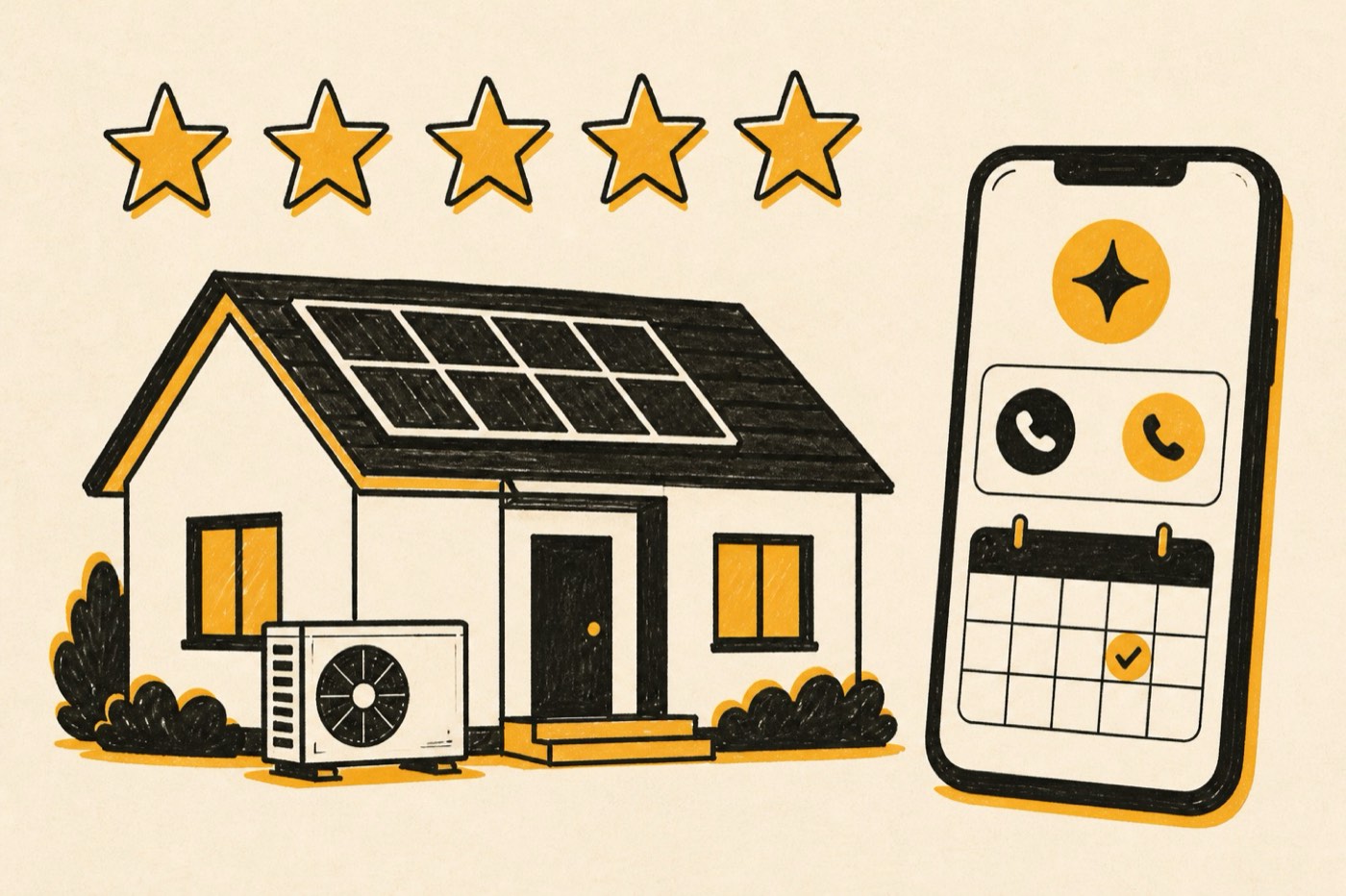
Most Redding home service companies are built on referrals, and referrals are great until they slow down. A steady pipeline needs four parts working together: get found (a strong Google profile and Local Services Ads), get chosen (reviews and a credible site), get booked (a quote or booking flow that works on a phone), and get kept (follow-up and maintenance plans). Plan all four around Redding's seasons.
The October phone problem
Every HVAC owner in Redding knows the rhythm. July and August, the phone doesn't stop. Techs are booked out, you're turning down work, and marketing feels like the last thing you need. Then October comes, the evenings cool off, and the phone goes quiet enough that you check whether it's plugged in.
Roofers feel it before the rains. Solar installers feel it when a homeowner stalls between quote and signature. General contractors feel it when the big referral source retires and moves to Idaho.
Referrals built most of the good companies in Shasta County, and they should stay at the center. But referrals are a faucet you don't control. The goal of marketing for a home service company isn't to replace word of mouth. It's to build the plumbing around it, so work keeps coming when the referrals run dry.
Think of your marketing as a duct system
You already know this one. A brand-new 18 SEER unit hooked to leaky ductwork still leaves the back bedroom hot. The equipment isn't the problem. The air just never gets where it's supposed to go.
Marketing works the same way. Most of the home service companies we talk to don't have a demand problem. They have a leak somewhere between the search and the signed job. Picture a Redding HVAC company with 200 five-star reviews and no booking form, where the only way in is a phone that rings out after hours. The reputation (the equipment) is excellent. The ducts are leaking everywhere.
So we look at it as four runs of duct, in order.
| Stage | The question the homeowner is asking | What has to be true |
|---|---|---|
| Found | "Who fixes this near me?" | You show up in the map pack, in Local Services Ads, and in AI answers |
| Chosen | "Can I trust them?" | Recent reviews, real photos, a site that looks like a working business |
| Booked | "How do I get on the schedule?" | A booking or quote flow that works on a phone, and someone who answers |
| Kept | "Who do I call next time?" | Follow-up, maintenance plans, review asks, a reason to come back |
Fix the leaks in order. More traffic into a broken booking flow is just paying to heat the attic.
Found: show up where homeowners actually search
When the AC dies in a Redding heat wave, nobody browses. They search, they look at the top few results, and they call. In July 2024, Redding hit 119 degrees, the hottest day on record for the city. On days like that, being third in the map pack is a very different business than being eighth.
Three things get you found.
Your Google Business Profile. The most specific primary category, an accurate service area, real photos, matching phone numbers. This is the foundation, and it's free. We cover it in detail in our local SEO guide for Redding, including a monthly checklist.
Google Local Services Ads. These are the ads at the very top of many home service searches, with a badge and a call button. They work differently from regular Google Ads, which is why they deserve their own section below.
AI answers. More homeowners now ask ChatGPT or Google's AI answers for "the best roofer in Redding." Those answers often cite directories and review sites rather than your own website. If you're not well represented in those places, you're invisible in a growing channel. Our piece on who ChatGPT recommends in Redding explains how to change that.
How Google Local Services Ads work for HVAC, roofing and solar
Local Services Ads (LSAs) are built for exactly this kind of business. Google's eligible home services list includes HVAC, roofing, solar energy, electricians, plumbers and general contractors, among others.
Here's what matters, straight from Google's own pages.
You pay per lead, not per click. Google says you only pay when a potential customer gets in touch through your ad. You set a budget based on how many leads you want each week. Google's getting started page also lets you give feedback on leads and track lead credits.
The badge changed. If you've heard about "Google Guaranteed" or "Google Screened," those are retired. Google replaced the Google Guaranteed, Google Screened and License Verified by Google badges with a single Google Verified badge, effective October 20, 2025, and ended the money-back guarantee that came with Google Guaranteed (Search Engine Roundtable covered the change). To earn the badge, your business goes through Google's screening, which includes checks on business registration and identity. If an agency is still pitching you the guarantee, that's a sign their playbook is out of date.
Ranking isn't just your bid. Google's page on how LSA ranking works lists the factors:
- Your bid (the most you're willing to pay for a lead)
- Responsiveness, and Google says missed calls can hurt it
- The context of the search and how relevant your business is to it
- Whether you accept message and booking leads, not just calls
- Profile quality: your rating, number of reviews, average response time and photo quality
Read that list again and notice how much of it isn't about money. Reviews, answering the phone and good photos all move you up. The company that answers on the second ring and has a hundred recent reviews can outrank a bigger budget.
Where owners lose money on LSAs: nobody answers during the busiest hours, so leads go to voicemail and your responsiveness drops. Or the ads run full blast in August when you're already booked three weeks out. Tie your LSA budget to your actual capacity, and make sure someone (or a call service) picks up.
Chosen: why homeowners pick one company over another
A homeowner looking at three HVAC companies in the map pack is doing quick math. Who looks real, who looks busy, who looks like they'll show up.
Reviews, recent and specific. Volume matters, but recency matters to people too. A company with 200 reviews and nothing new since 2023 raises a quiet question. Ask every customer, right after the job, with a one-tap link by text. Google's Maps content policy prohibits offering discounts or perks for reviews and prohibits only asking happy customers, so build the habit of asking everyone. Reply to every review.
Real photos. Your trucks, your techs, your crews on actual Redding roofs. Stock photos of a smiling model holding a wrench fool nobody.
A website that matches the business. It doesn't need to win awards. It needs to load fast on a phone, say what you do and where, show proof, and make the next step obvious. A homepage with a 2019 copyright and a "coming soon" banner tells a homeowner more than you'd like.
Proof of the boring stuff. License number, insurance, warranties, financing options for big tickets like a full replacement or a solar install. These are the questions homeowners ask before they call. Answer them on the page.
Booked: the quote and booking flow is where most leads leak
This is the duct run we find disconnected most often. A homeowner finds you, likes what they see, and then hits a wall: no booking button, a contact form that goes to an inbox nobody checks, or a phone that rings out at 5:01 pm.
Here's what a working booking flow looks like for a Redding home service company.
- A clear primary action on every page. "Book a service call" for HVAC repair. "Get a free roof inspection" for roofers. "Get a solar quote" for solar. One main button, repeated.
- A short form. Name, phone, address or ZIP, what's going on, and a preferred time. Every extra field costs you leads.
- Instant confirmation. A text or email that says "Got it, here's what happens next." Silence makes people call the next company.
- A callback promise you keep. If the form says "we'll call within an hour," call within an hour.
- Tracking that works. Form submissions and calls recorded in analytics, so you know which source sent the job. A placeholder analytics tag means you're flying blind.
For bigger tickets like roof replacements and solar, the flow is a quote flow rather than a booking. Capture the basics, schedule the site visit, and send the proposal quickly. The longer a quote sits, the colder it gets.
This is the unglamorous part of marketing, and it's often where the biggest gains are. After one site relaunch we ran, contact-form submissions went up 133%. Same business, same reputation, better ducts.
Kept: follow-up turns one job into ten
The cheapest job you'll ever book is the second one from a customer who already trusts you. Most home service companies leave this money on the table because nobody owns follow-up.
Maintenance plans. For HVAC, a spring tune-up before the heat and a fall check before the first cold snap. Sell the plan at the end of every repair call. It smooths out the seasonal swing and gives you a reason to be in touch twice a year.
Quote follow-up. For roofing and solar, a simple sequence after the proposal goes out: a check-in after a few days, an answer to the most common objection, and a final "are you still considering this?" A lot of "no" is really "I forgot."
Review asks and referral asks. Right after a good job, ask for the review. A few weeks later, ask who else they know. You're turning word of mouth from a happy accident into a habit.
Seasonal reminders. A short text or email when it matters: "Heat wave this weekend, here's how to check your filter." Useful beats salesy every time.
Plan around Redding's seasons, including fire season
Redding's calendar should drive your marketing calendar. Here's how we think about it for home services.
| Season | What homeowners are thinking | What to do |
|---|---|---|
| Spring | "Will my AC make it through summer?" | Push tune-ups and maintenance plans, build reviews before the rush |
| Summer | "My AC just died" | Lean on LSAs and the map pack, but match ad budget to capacity |
| Fire season | Smoke, air quality, evacuation worries | Calm, useful updates, not promotions |
| Fall | "Is my furnace okay? Is my roof ready for rain?" | Furnace checks, roof inspections, quote follow-up |
| Winter | Leaks, heating failures, planning next year's projects | Emergency visibility, plus solar and remodel quotes for spring |
Fire season deserves its own note. People here remember the Carr Fire, which burned more than 229,000 acres across Shasta and Trinity counties in 2018 and destroyed over 1,600 structures. When smoke is in the air or an evacuation order is out, pause anything cheerful or promotional. If you have something genuinely useful to say (how to protect your HVAC from smoke, how to check your roof after ash fall, your hours if you're open for emergencies), say it plainly and briefly. Customers remember who was helpful and who was selling.
What to fix first
If you only have the time or budget for one move, do them in this order.
- Fix the leaks you can see. Phone numbers that match, a working analytics tag, a booking or quote button on every page.
- Get your Google Business Profile complete and start a weekly review habit.
- Turn on Local Services Ads with a budget tied to your real capacity, and commit to answering every lead fast.
- Add follow-up: a maintenance plan offer and a short quote follow-up sequence.
- Then scale: search ads, seasonal Meta campaigns, service-area pages and AI visibility.
If you're deciding whether to tackle this in-house or bring in help, our guide on how to choose a marketing agency in Redding lays out the questions to ask.
Questions people ask next.
Are Google Local Services Ads worth it for a small Redding contractor?
Often, yes, because you pay per lead rather than per click and the ads sit at the top of the search. They work best when you answer calls quickly, have strong recent reviews and keep the budget matched to how much work you can take on. If leads go to voicemail, you'll pay for them and your ranking can suffer.
Is Google Guaranteed still a thing?
No. Google retired the Google Guaranteed, Google Screened and License Verified by Google badges on October 20, 2025, and replaced them with a single Google Verified badge. The money-back guarantee tied to Google Guaranteed ended at the same time.
How do I get more leads in the slow season?
Use the busy season to build the slow one. Sell maintenance plans on summer repair calls, follow up on open quotes, and run fall and winter campaigns for furnace checks, roof inspections and next year's projects. Year-round reviews keep you visible when demand returns.
Should I stop relying on referrals?
No. Referrals are usually your best leads. The goal is to support them: make sure people who hear your name can find you, trust what they see and book easily, and give happy customers an easy way to send the next one.
Do I need a new website to get more booked jobs?
Not always. Many sites just need a clear booking or quote button, a shorter form, matching phone numbers and working tracking. If the site is slow on a phone or years out of date, a rebuild usually pays for itself faster than more ad spend.
Want to know where your pipeline is leaking? Book a 30-minute call with Alex. We're in Redding too, and we'll walk through your profile, ads and booking flow and tell you what we'd fix first.
Founder of Cultre in Redding, California. Fifteen years building marketing for software companies and local businesses, and the one who'll be on your call.
Alex