

Opening a Redding restaurant? Budget marketing for year one

Alex AndersonFounder, Cultre
- PublishedNov 6, 2026
- Read6 min
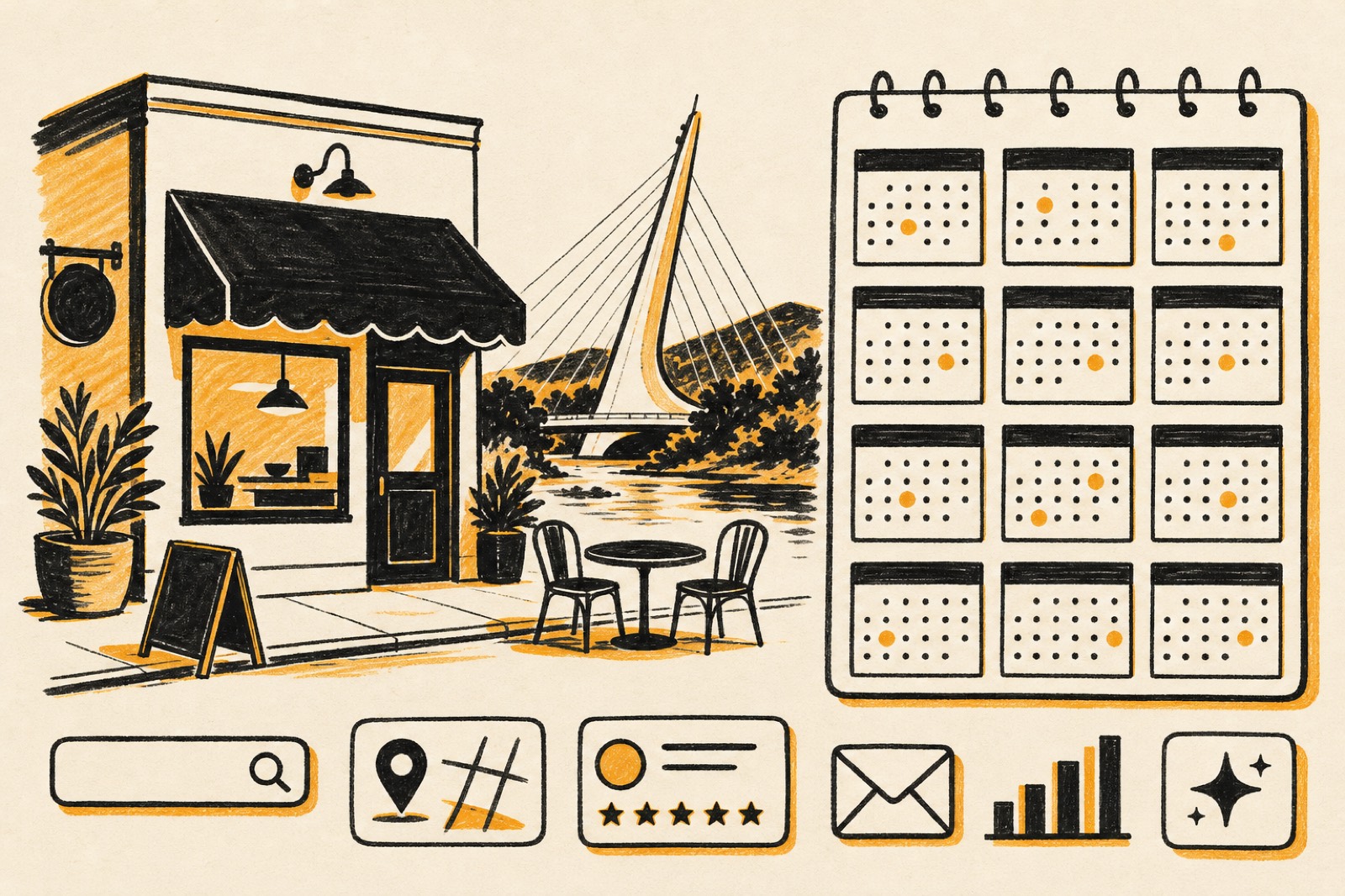
If you're opening a restaurant in Redding, plan your marketing budget for the whole first year, not just the grand opening. Opening week buzz fades fast, and the hard months come after it: the novelty dip, the summer heat and the winter slow-down. Spread the money across all twelve months and keep enough in reserve to fix what the first few months teach you.
Every Redding local knows this storefront
You know the one. It's been a burger place, then a taco spot, then something with small plates and Edison bulbs. Each time, there's a ribbon cutting, a line out the door the first weekend and a lot of excited posts in the local Facebook groups. Then, a year or so later, the sign changes again.
I want to be honest about the numbers here. I couldn't find a reliable, published restaurant turnover rate for Redding or Shasta County, so I'm not going to make one up. What I can point to is the best-known research on the question. A Cornell study by H.G. Parsa and colleagues, published in 2005, followed restaurants in Columbus, Ohio, and found that about 26 percent of independent restaurants failed in their first year. That's a lot better than the "90 percent fail" myth people repeat, and still a lot of closed doors.
Restaurants close for plenty of reasons besides marketing, and the study looks at many of them. But the pattern I see most in Redding is a restaurant with no real marketing plan at all: a few posts in the local Facebook groups, and a hope that word of mouth does the rest.
Opening day is planting day, not harvest
I garden, and a new restaurant reminds me of a new garden bed. Planting day is exciting. You've got fresh soil, a plan and a bunch of neighbors stopping by to see what you're growing. Then everyone goes home, and the real work starts: watering every day through July, when Redding feels like the inside of a pizza oven.
The ones that do budget for marketing usually spend like it's harvest on planting day. They pour the whole budget into the opening (the banner, the influencer dinner, the launch ads) and then go quiet. The buzz from opening week is real, but it's borrowed. It comes from curiosity, and curiosity doesn't come back for a second visit on its own (the seedling with no water).
What keeps a restaurant open is repeat guests, and repeat guests come from months of steady reminders that you exist, you're good and you're open tonight.
The four seasons of a first year
Here's how I'd think about a Redding restaurant's first twelve months. The exact dates depend on when you open, but the shape is the same.
| Season | What's happening | Where the marketing should go |
|---|---|---|
| The opening (first 4–6 weeks) | Curiosity traffic, friends and family, Facebook group posts | Google Business Profile complete on day one, photos, a reason to come back (a punch card, an email signup, a next-visit offer) |
| The dip (months 2–4) | Curiosity runs out, real habits form or don't | Steady local ads, reviews from the regulars you just earned, a weekly reason to visit (a special, a night, an event) |
| The heat (summer) | Locals stay home in triple digits, lake traffic and I-5 travelers pass through | Show up on Google Maps for travelers, lean on patio or takeout, catch the lake crowd on their way in and out |
| The quiet (winter) | Tourism slows, locals budget after the holidays | Your list of regulars, gift cards, comfort-food menus, events that give people a reason to leave the house |
The opening is deliberately not the biggest row.
How to split the money
I'm not going to hand you a dollar figure, because a downtown dinner spot and a drive-through coffee stand on Hilltop live in different worlds. For the overall number, how much a small business should spend on marketing walks through the percentage-of-revenue math for the North State.
What I will give you is the shape. I call it open, sustain, reserve:
- Open (about a third or less). The launch push: photos, signage, opening ads, your first round of local outreach. Enough to be noticed, not so much that you have nothing left in March.
- Sustain (the biggest share). The month-in, month-out work across the whole year: local ads, social posts, review requests, email or text to your regulars. Boring, steady, and the part that pays the rent.
- Reserve (a slice you don't touch yet). Money set aside for what the first few months teach you. Maybe weekday lunch is dead and needs its own push. Maybe the patio is your secret weapon. You won't know until you're open, so don't spend it before you do.
If you're writing a business plan, put marketing in every month of the first year, the same way you'd put rent in every month. Nobody plans to pay rent for the opening and figure out the rest later.
The free stuff that matters most
Some of the most important marketing a new restaurant does costs almost nothing, and it's easy to skip in the chaos of opening.
- Claim and finish your Google Business Profile before you open. Hours, menu, photos, the right category. When a traveler on I-5 searches for dinner near them, this is what they see first. Here's the monthly routine we use.
- Ask for reviews from week one. Your first regulars are your best reviewers. A short, honest ask at the table or on the receipt goes a long way.
- Capture the guest. An email or text list turns one curious visit into a relationship you can reach in February, when you need it most.
- Show up locally. Redding still runs on word of mouth and local Facebook groups. Be a real neighbor there, not just an ad.
For the bigger picture on getting found, local SEO in Redding covers the rest.
What to watch in the first six months
Run the numbers you already have every month: covers by day of the week, how many guests come back, which days are dead, what people say in reviews. Each one tells you where the reserve should go. If Tuesday is empty, Tuesday gets a reason. If reviews keep mentioning slow service, that's not a marketing problem, and no ad will fix it.
Marketing brings people to the table. It can't make them come back if the food or the service doesn't. The best plan does both jobs: steady marketing that fills seats, and honest listening that makes the second visit better than the first.
If you're planning an opening in Redding and want help building a first-year plan you'll actually stick to, I'd love to talk it through. We're here, too. Grab 30 minutes with me.
Here's to every new spot in town that makes it to its second anniversary, and to the regulars who get them there. 🍻
Questions people ask next.
How much should a new restaurant spend on marketing?
It depends on your concept, size and location, so start with a percentage of your projected revenue rather than a flat number. More important than the total is the timing: plan spending for all twelve months of the first year, with only a modest share on the opening and some held in reserve.
Do most restaurants really fail in the first year?
No. The often-repeated "90 percent" figure is a myth. A Cornell study of restaurants in Columbus, Ohio, found about 26 percent of independent restaurants failed in their first year. That's still a real risk, and it's why planning beyond the opening matters.
When should a restaurant start marketing before opening?
A few weeks before the doors open is a good rule. Claim your Google Business Profile, post behind-the-scenes updates, and start an email or text list so you have people to invite on day one. Just don't spend the whole year's budget before you've served a meal.
What's the best marketing for a restaurant in Redding?
A complete Google Business Profile, a steady stream of honest reviews and a way to reach your regulars directly do the most work. Add local ads and a real presence in community Facebook groups, and plan around Redding's summer heat, lake season and winter slow-down.
Founder of Cultre in Redding, California. Fifteen years building marketing for software companies and local businesses, and the one who'll be on your call.
Alex