
Do SaaS comparison pages still work in AI search?

Alex AndersonFounder, Cultre
- PublishedOct 30, 2026
- Read6 min
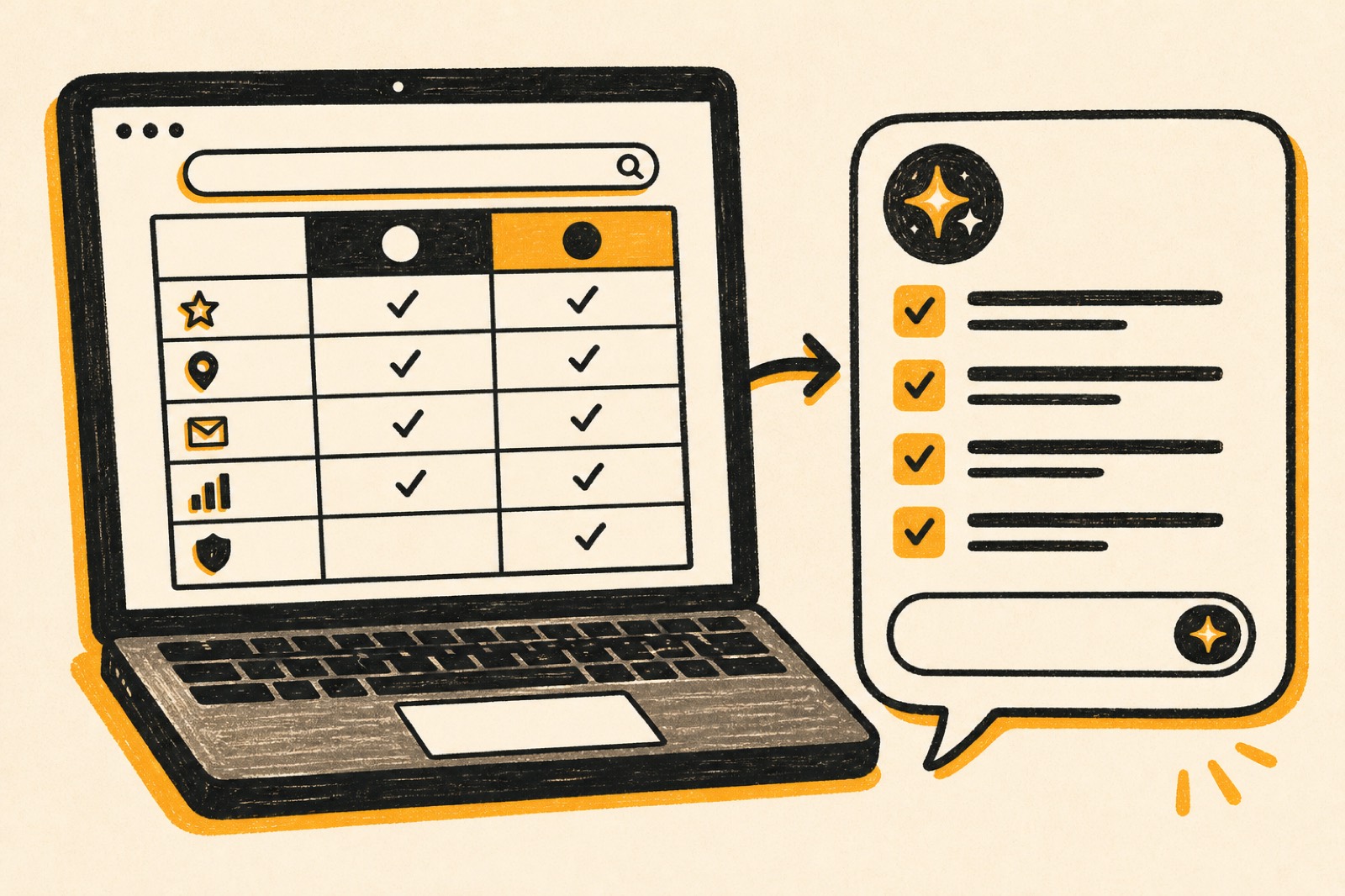
Yes. "X vs Y", "alternatives to X" and "best X for Y" pages are among the formats AI engines cite most for software questions, because they answer the exact comparison a buyer is asking about. The ones that get quoted are fair: they name who each product is best for, show real differences in a table, and admit where the other option wins.
The page your buyer reads right before they decide
Picture the second-to-last step of a software purchase. The buyer has a shortlist of two. They open ChatGPT and type "Ledgerly vs Invoicely for a 20-person agency." (Both made up. We'd rather not hold up a real company's page as the "before" picture.)
Whatever the AI says next is the closest thing your buyer gets to a coin flip with commentary. If your comparison page is one of the sources it reads, you get a say in that commentary. If it isn't, your competitor's page, or a reviewer who used your product for nine minutes, does the talking.
I think about this a lot on Lake Shasta. The best bait shop I know will tell you, to your face, that the shop across the marina has better shad right now. You'd think that costs them a sale. It doesn't. It's the reason you believe them about everything else. (Honesty is the lure.)
Comparison pages work the same way, for people and for AI engines.
Do AI engines actually cite comparison pages?
They do, and a lot. When Ahrefs looked at the sources ChatGPT cited for "best X" style prompts, "best X" blog lists made up 43.8% of page types, and recently updated lists were the most prominent page type (Ahrefs). The same study found that in Google results for "best X software," 67.6% of the lists featured the publisher ranking itself first.
That second number is the warning label. Everyone is writing these pages, most of them crown themselves, and buyers have noticed. The opportunity isn't "publish a comparison page." It's "publish the comparison page people believe."
The mechanism is simple. AI search tools break one buying question into several lookups (pricing, integrations, fit, alternatives) and pull passages that answer each one. A page built as a direct comparison hands the engine a ready-made answer for the "vs" lookup. That's the same idea behind the pillar guide, how to get your SaaS recommended by ChatGPT: give the engine a room for every question the buyer asks.
The three comparison pages every SaaS should have
There are three common shapes. Each catches a different moment in the buyer's head.
| Page type | Buyer's prompt | What it has to do | Common mistake |
|---|---|---|---|
| You vs competitor | "Ledgerly vs Invoicely" | Show the real differences side by side, and say who should pick which | Pretending you win every row |
| Alternatives to the leader | "Invoicely alternatives" | Meet people already unhappy with the leader and explain the options, you included | A list of one (you) with four filler names |
| Best X for a specific buyer | "best invoicing software for small agencies" | Answer a narrow fit question with clear criteria | A generic "top 10" with no criteria at all |
Start with whichever prompt your sales team hears most. If prospects keep saying "we're also looking at Invoicely," that's your first page. If they're switching away from the leader, write the alternatives page first.
The fair-fight framework: five parts of a comparison page AI will quote
This is the structure we use. Each part exists because either a buyer or an engine needs it. (The bait-shop rule, applied to a web page.)
- The verdict up top. Two or three sentences that answer the comparison directly: "Ledgerly fits agencies that bill by project. Invoicely fits teams that need deep accounting integrations." This is the passage the AI lifts, so make it complete on its own.
- Who each product is best for. A short "choose Ledgerly if" and "choose Invoicely if" pair. Google's own guidance for review content asks writers to "explain which might be best for certain uses or circumstances" (Google Search Central). That's the most useful sentence on the page for a buyer, and it's the one most companies skip.
- A real comparison table. Rows for the things buyers actually ask about: pricing model, starting price, key integrations, setup time, support. Use plain values ("$25 a month," "QuickBooks and Xero"), not checkmark theater where you have 14 green ticks and they have two.
- Where the other product wins. Name at least one row where the competitor is the better choice, and say so plainly. This is the bait-shop moment. It's also how a reader tells a comparison from an ad.
- Proof and dates. Link to your pricing page and docs, link to their public pricing, and put a "last checked" date on the page. Prices change. A dated page tells both the buyer and the engine you keep it current.
If you only do one, do number 4. A fair page with a weaker table beats a perfect table with no admissions.
Isn't it risky to praise a competitor on your own site?
Less risky than the alternative. The buyer is going to compare you anyway. The only question is whether your honest version is one of the sources, or whether they read a self-crowned list from someone else and a Reddit thread.
There's also a practical reason. AI engines lean on corroboration: what other sites say about you. If your page claims you win on everything and three review sites say you're weaker on integrations, your page reads as the outlier, and outliers don't get quoted. A page that already admits "Invoicely has more accounting integrations" agrees with the rest of the web, which makes the rest of what you say more believable. (We go deeper on corroboration in why ChatGPT recommends your competitor.)
And yes, you'll occasionally send a prospect to the other shop. Good. They weren't going to stay a customer anyway, and your churn rate will thank you.
How to keep comparison pages from going stale
Comparison pages rot faster than almost anything else on a SaaS site. A competitor changes their pricing in March, and by April your table is quietly wrong. Wrong comparison pages are worse than none, because they're the ones a skeptical buyer fact-checks.
A simple habit keeps them honest:
- Quarterly check. Every three months, recheck every row against the competitor's public pages. Update the "last checked" date even if nothing changed.
- Sales-call trigger. When a rep hears "but their site says…" on a call, that page gets reviewed that week.
- One owner. One named person owns each comparison page. Shared ownership means no ownership.
Where to start this week
Pull your last 20 lost deals or closed-won notes and write down every competitor named. The one that appears most is your first "vs" page. Write the verdict and the "choose them if" section first, before the table. If those two parts are honest, the rest follows.
If you want help mapping which comparison pages your buyers actually need, book 30 minutes with me. And if structured data is next on your list, here's what schema markup actually does for a SaaS site.
Here's to the honest bait shop. 🍻
Questions people ask next.
Should I put my product first in a "best X" list on my own blog?
You can, but say plainly that it's your product and explain the criteria you used. A self-ranked list with clear criteria and honest notes on the others reads as a point of view. One without criteria reads as an ad, and buyers have learned to skip those.
Can I name competitors on my site legally?
In the US, generally yes. The FTC's policy statement on comparative advertising supports naming competitors as long as the comparison is truthful and not deceptive (16 CFR 14.15). Trademark and false-advertising rules still apply. Stick to verifiable facts, link to their public pages, and run anything sensitive past your lawyer. This isn't legal advice.
How many comparison pages does a SaaS company need?
Start with one "vs" page for your most common competitor and one alternatives page for the category leader. Add more as sales calls tell you which comparisons buyers make. Five honest pages beat thirty thin ones.
Do comparison pages help in Google too, or only in AI answers?
Both. The same buyer types "X vs Y" into Google and into ChatGPT, and a clear, current comparison page can show up for each. The structure that helps AI engines (verdict first, a clean table, plain answers) also helps a skimming human.
Founder of Cultre in Redding, California. Fifteen years building marketing for software companies and local businesses, and the one who'll be on your call.
Alex