What is answer engine optimization for B2B software?

Alex AndersonFounder, Cultre
- PublishedOct 29, 2026
- Read8 min

Answer engine optimization (AEO) is the work of making your software the product an AI assistant names when a buyer asks it for a recommendation. SEO earns you a spot in a list of links. AEO earns you a spot in the answer itself. For B2B software, that means clear, quotable pages, coverage of every comparison buyers ask about, and a reputation on the sites the AI reads.
What does AEO actually mean for a software company?
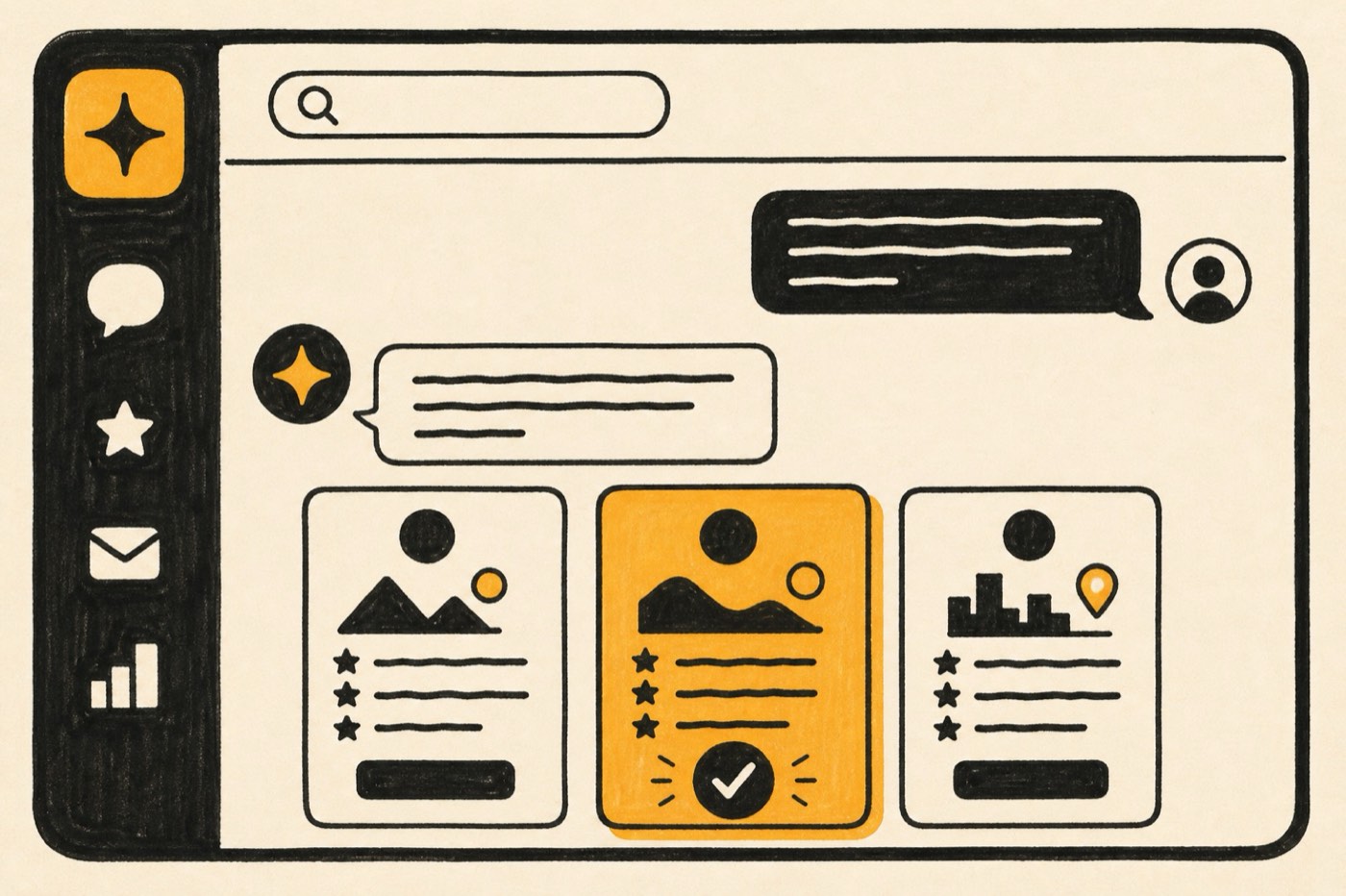
Picture your best-fit buyer on a Tuesday afternoon. She's the ops lead at a 60-person logistics company, and her boss wants a shortlist of route-planning tools by Friday. Five years ago she'd have Googled it and opened twelve tabs. Today she types the whole situation into ChatGPT, gets three names and a paragraph on each, and forwards the answer to her boss.
If you're not one of the three names, you weren't on the shortlist. You never got the chance to be cut from it.
That's the whole idea of AEO in one scene. The "answer engine" is any tool that answers a question instead of handing over a list of links: ChatGPT, Perplexity, Gemini, Claude, Microsoft Copilot and Google's AI Overviews and AI Mode. The "optimization" is everything you do so that, when the question is about your category, your product is part of the answer.
I explain it with a trip to the bait shop. Every lure in the store is on a shelf somewhere, sorted by aisle, and you can browse all of it. That's search. But most people don't browse. They walk up to the counter and ask the guy who's been out on Lake Shasta all week what the bass are biting on. He names two lures. Those two sell. (The counter, not the shelf.)
SEO gets you on the shelf in the right aisle. AEO gets the guy at the counter to name you.
How is AEO different from SEO?
AEO is built on SEO, not instead of it. Google says outright that there are "no additional requirements to appear in AI Overviews or AI Mode, nor other special optimizations necessary" beyond what Search already needs (Google Search Central). A page that can't be crawled and indexed can't be quoted either.
What changes is the shape of the win. Here's how I lay it out for software teams:
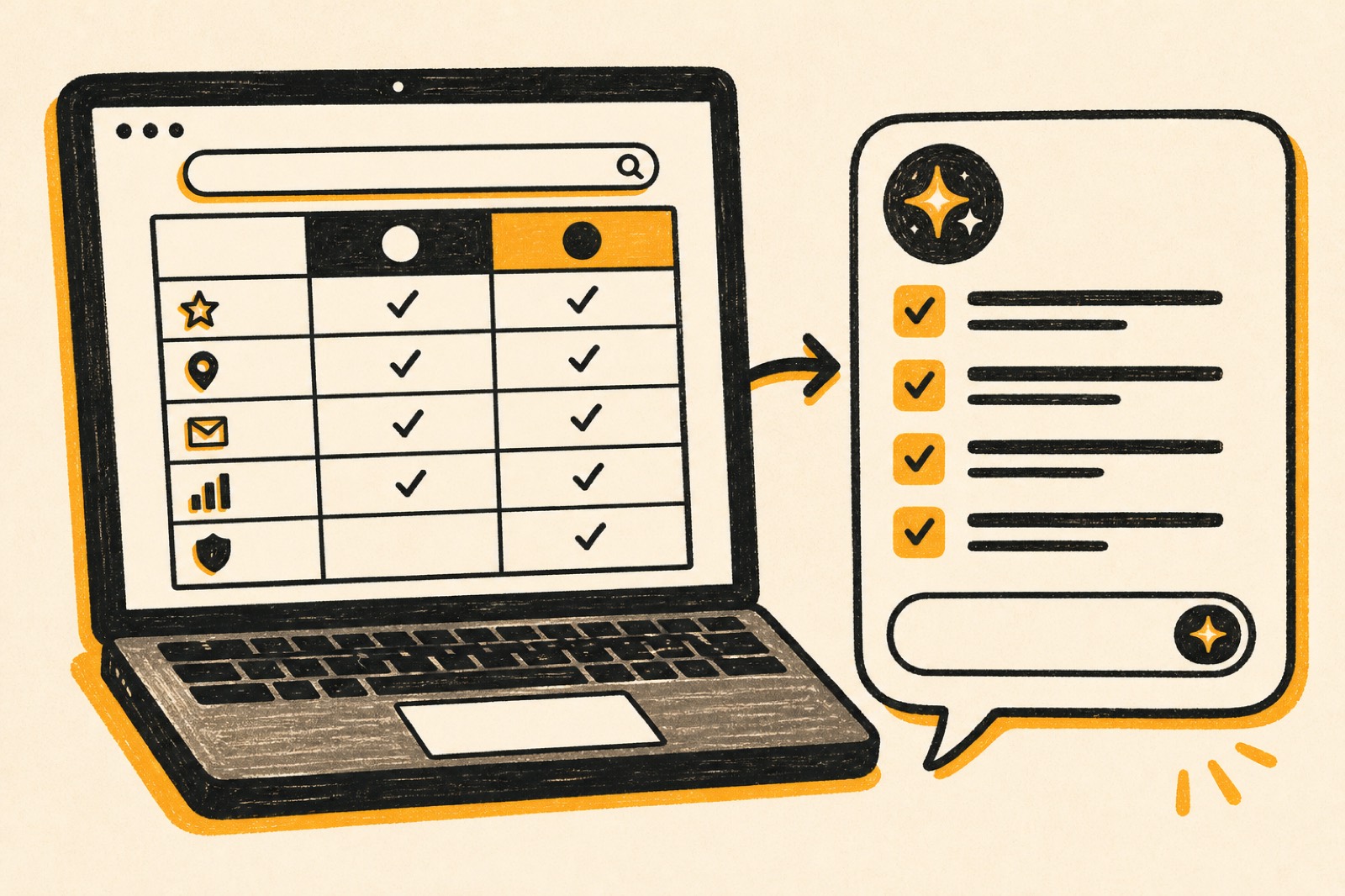
| SEO (the shelf) | AEO (the counter) | |
|---|---|---|
| What the buyer sees | Ten links, plus ads | One answer naming two to five products |
| What you're competing for | A ranking position | A mention, a citation, or both |
| Unit of content | The page | The passage: a few sentences that stand alone |
| What earns trust | Links and relevance | What the rest of the web says about you |
| How one question works | One query, one results page | One question split into many sub-searches |
| How you measure it | Rankings, clicks | Prompt tracking, AI referrals, "how did you hear about us" |
That fifth row matters more than people expect. Google describes its AI features using "query fan-out," "issuing multiple related searches across subtopics and data sources" to build one response (Google Search Central). Our ops lead asked one question. The engine quietly looked up pricing for mid-size fleets, integrations with her TMS, reviews from logistics companies and "alternatives to" the category leader. Each of those is a chance for your product to show up, or not.
Why does AEO matter more for B2B software than for most businesses?
Three reasons, and they stack.
B2B software is a research-heavy purchase. Nobody buys a $40,000-a-year platform on impulse. Buyers ask a lot of questions before they ever talk to sales, and AI assistants are very good at the "help me compare" stage. That stage used to happen on your website and on review sites. A growing share of it now happens inside a chat window you can't see.
The shortlist is short. A results page shows ten organic links, and a decent page-two ranking still gets occasional traffic. An AI answer usually names a handful of products. There's no page two at the counter.
The answer gets forwarded. B2B buying is a committee sport. When the AI's paragraph gets pasted into Slack or an email to the CFO, it becomes the starting frame for the whole group. Being described accurately in that paragraph is worth as much as being named in it.
What does an AI assistant need to know to recommend your software?
When the guy at the bait shop recommends a lure, he can tell you what it is, what it's for, roughly what it costs and why he trusts it. If he's fuzzy on any of those, he names something else. AI assistants behave the same way.
I call this the four-question test. Before a single tactic, check whether the open web can answer these four questions about your product, clearly and consistently:
- What is it? One plain sentence naming the category. "Route-planning software for regional delivery fleets" beats "an intelligent logistics orchestration platform."
- Who is it for? Industry, team size, situation. Also who it's not for, which gives the AI confidence about when to name you.
- What does it cost? Real prices or real ranges. If you hide pricing, the AI will quote a third-party guess or your competitor's page instead.
- Why should anyone trust it? Reviews, comparisons, community threads and press that the AI can read, on sites other than yours.
Ask ChatGPT, Perplexity and Gemini those four questions about your own product today. Wherever the answer is wrong, vague or missing, that's where your AEO work starts. (If the counter guy can't describe the lure, he won't sell it.)
What does AEO work look like week to week?
Less mysterious than the acronym suggests. Most of it falls into five buckets, and I cover each in depth in the AEO pillar guide for SaaS.
- Access. Make sure AI search crawlers can reach your pages. OpenAI states that "sites that are opted out of OAI-SearchBot will not be shown in ChatGPT search answers" (OpenAI). Plenty of SaaS sites blocked it by accident.
- Answer-first pages. Put the direct answer in the first sentence or two under every heading, so a passage can be lifted and still make sense.
- Coverage. Build pages for the sub-questions buyers actually ask: pricing, comparisons, alternatives, use cases, integrations.
- One identity. Use the same one-sentence description of your product on your site, LinkedIn, Crunchbase, G2 and every bio.
- Reputation off your site. Earn reviews, community answers and mentions where AI engines look. In an Ahrefs study of 75,000 brands, branded web mentions had the strongest correlation with appearing in Google's AI Overviews (0.664), far ahead of backlinks (0.218) (Ahrefs). Correlation, not proof, but it lines up with what we see.
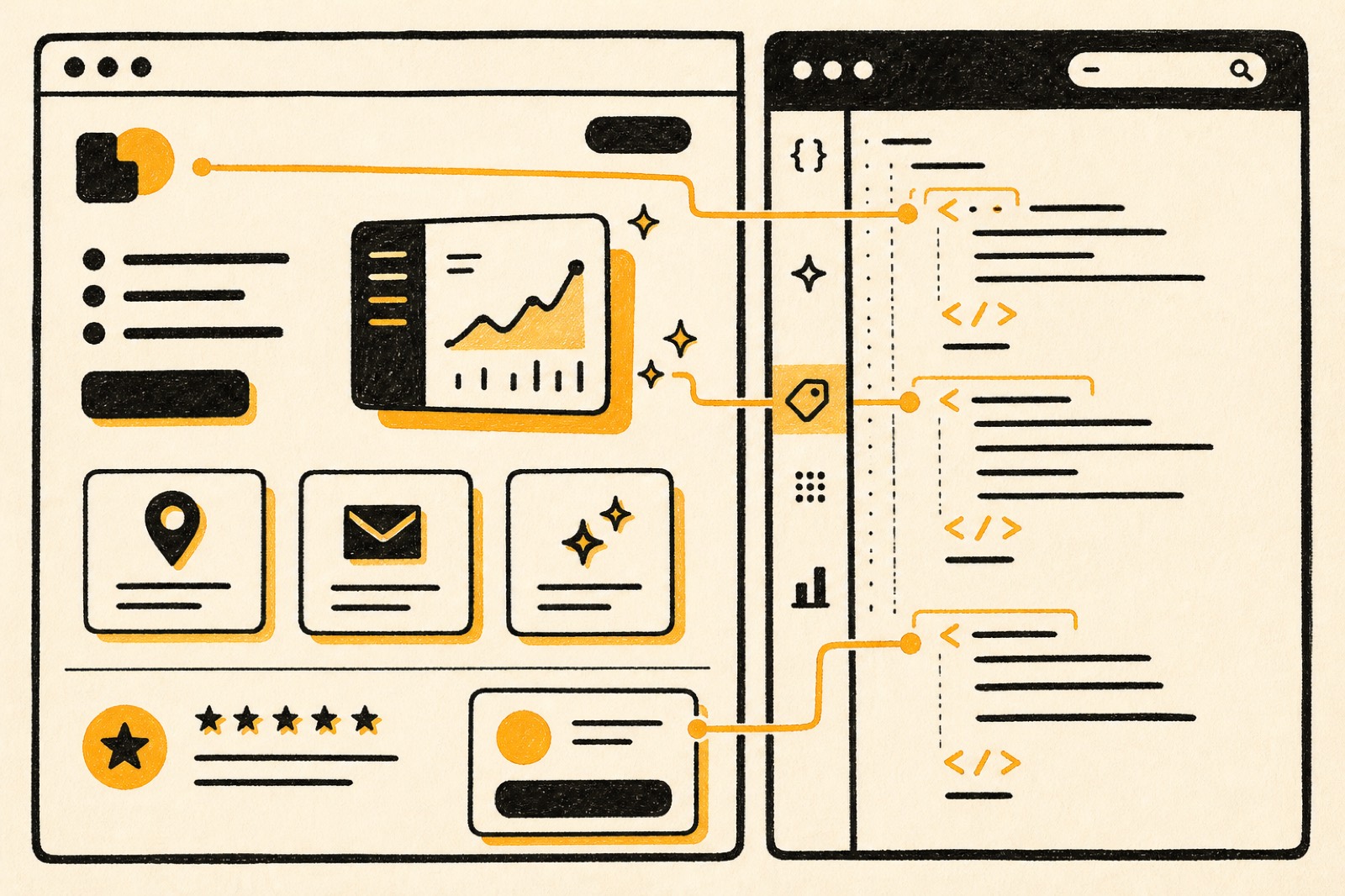
Schema markup comes up in every AEO conversation, so a quick word: it helps engines describe a good page accurately, but it won't rescue a weak one. We break down which types are worth it in schema for SaaS websites.
What AEO is not
A lot of AEO advice right now is the marketing equivalent of a lure with three spinners, a rattle and glitter. Looks great in the package. Fish don't care.
- It's not a trick or a file. No single tag, prompt hack or document makes ChatGPT recommend you.
- It's not paid placement. You can't buy your way into the answer itself.
- It's not a replacement for SEO. If your pages don't rank or get indexed, your AEO has nothing to stand on.
- It's not instant. Fixing crawl access can show up in weeks. Building reputation off your site takes months and compounds.
- It's not perfectly measurable. AI answers vary run to run, and many buyers see you in an answer and type your URL later. You'll read trends, not exact counts.
If someone sells you AEO as a switch you flip, keep your wallet in your tackle box.
How do you know if AEO is working?
Measure it the way you'd judge a fishing spot: over a season, not one cast.
- Track a fixed set of prompts. Pick 20 to 30 questions your buyers really ask. Run them monthly in the major assistants. Log four things each time: named or not, linked or not, described correctly or not, and who's named instead.
- Give AI referrals their own channel. In GA4, group traffic from chatgpt.com, perplexity.ai and similar sources so it stops hiding inside "Referral." We'll walk through the setup in a dedicated guide.
- Ask on the form. Add "ChatGPT or another AI assistant" to your "How did you hear about us?" field. It catches the buyers analytics never will.
If you want to see where you stand right now, the fastest diagnostic is to ask why the AI names someone else. I wrote that up in why ChatGPT recommends your competitor.
And if you'd rather have help building this than add it to your own list, it's part of what we do on the growth side of Cultre. Either way, start with the four-question test. It's free, it takes an afternoon, and it tells you exactly what the guy at the counter thinks of you.
Here's to being the lure he reaches for first. 🍻
Questions people ask next.
Is AEO the same thing as GEO or LLMO?
Mostly, yes. GEO (generative engine optimization) and LLMO (large language model optimization) describe the same goal: being named and cited in AI-generated answers. Some people use AEO more broadly to include featured snippets and voice answers, but for a B2B software team the work is the same.
Do I need to do AEO if my SEO is already strong?
Strong SEO gives you a head start, because AI features draw on the same crawled and indexed pages. But ranking well doesn't guarantee you're named in the answer. Check the four questions above; if AI assistants describe you wrongly or not at all, you have AEO work to do.
How long does AEO take for a SaaS company?
Technical fixes like crawler access can show up within weeks. Rewriting key pages answer-first takes a month or two. Building third-party reputation on review sites and communities takes a quarter or more, and it keeps paying back.
Can a small SaaS company compete with big brands in AI answers?
Often, yes, in specific niches. AI answers respond to the exact situation a buyer describes, so a focused product with clear pages for that situation can be named over a bigger generalist. The narrower and more specific the buyer's question, the better a small company's odds.
Founder of Cultre in Redding, California. Fifteen years building marketing for software companies and local businesses, and the one who'll be on your call.
Alex