Do G2 and Capterra reviews affect what ChatGPT recommends?

Alex AndersonFounder, Cultre
- PublishedOct 31, 2026
- Read7 min
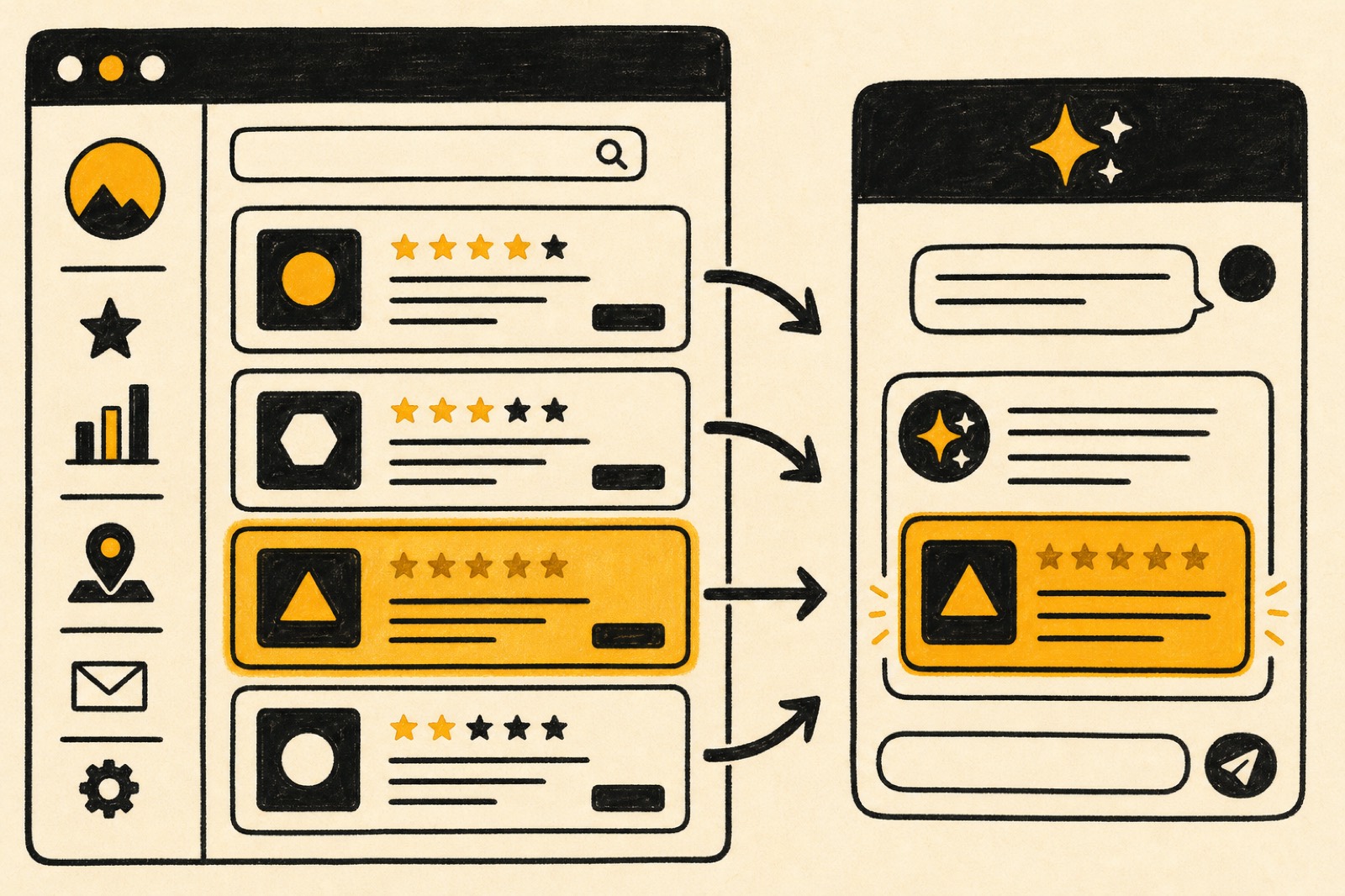
Yes, but not the way most teams assume. AI engines read G2 and Capterra as outside proof that your product exists, what category it's in and who it suits. Raw review count barely moves citations on its own. What matters more is being listed in the right category, with recent reviews that describe specific use cases in the words your buyers type into ChatGPT.
The review push that didn't move anything
Here's a scene I've watched more than once. A marketing lead reads that ChatGPT leans on review sites. They run a quarter-long campaign, gift cards and all, and take the G2 profile from 30 reviews to 120. Then they ask ChatGPT for "the best tool for their category" and get the same three competitors as before.
The reviews weren't wasted. They were aimed at the wrong thing.
I fish Lake Shasta, and the most useful thing at any marina isn't the tackle wall. It's the person behind the counter at the bait shop. Ask what's biting and they don't read you the lure packaging. They tell you what twenty anglers said this week: which arm of the lake, how deep, what color. A review site is that counter for software. The AI walks in, asks what's biting for "invoicing tools for small agencies," and listens to the chatter. (Your marketing site is the lure packaging. It gets read, but it's not what gets repeated.)
So the question isn't "how many people talked about us." It's "what did they say, how recently, and were they standing at the right counter."
How much do G2 reviews actually influence AI answers?
Less than the hype, more than zero. G2 published its own analysis of 30,000 AI citations across 500 software categories. It found that "categories with 10% more reviews have 2% more citations," and that "reviews explain less than 2% of the variance" (G2). G2 itself calls those "suggestive associations rather than causal effects."
Read that carefully, because it comes from the company with every reason to oversell reviews. More reviews nudge citations. They don't decide them. Something else is doing most of the work.
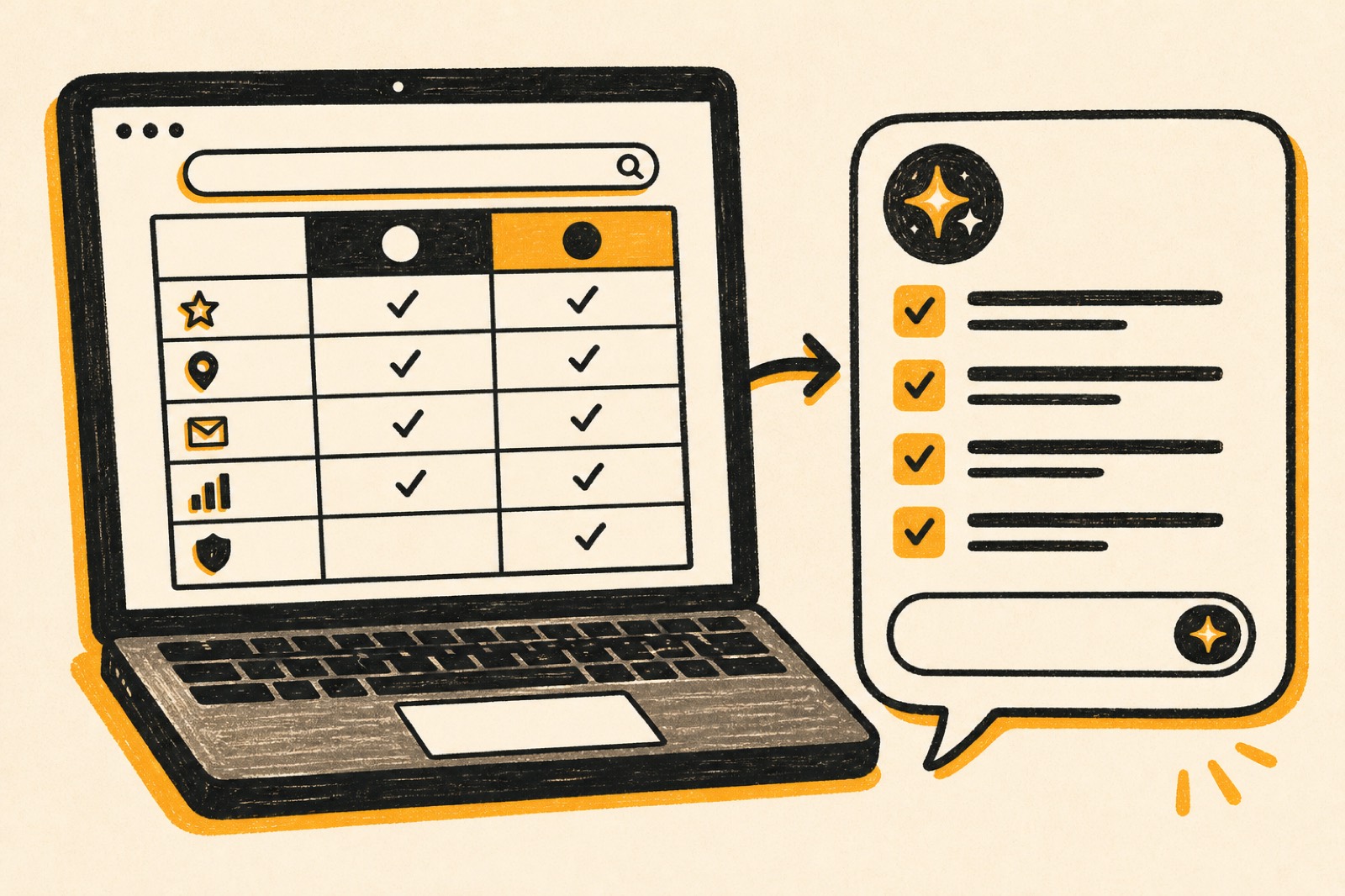
That something else is what the reviews make easy for the AI to verify. When ChatGPT or Perplexity answers a buying question, it usually searches, reads a handful of pages and writes from them. A G2 category page or a Capterra comparison is a dense, third-party summary of exactly the facts it needs: what the product is, who uses it, what people like and what they complain about. If your profile is thin, filed in the wrong category or full of "great tool, five stars," there's nothing quotable at the counter.
The bait shop audit: four checks for your review profiles
This is the audit we run before anyone asks a single customer for a review. Do it on G2, Capterra and whichever review site your category leans on.
| Check | The bait shop version | What to look at | Fix |
|---|---|---|---|
| 1. Right counter | You're asking at the marina, not the hardware store | Is your product in the category your buyers actually search? Secondary categories too? | Request category changes; claim missing secondary categories |
| 2. Same story | Everyone describes the same fish | Does your profile description match the one sentence on your homepage and LinkedIn? | Paste in your one-line positioning, word for word |
| 3. This week's report | Nobody trusts last summer's fishing report | How many reviews landed in the last 90 days? | Make review asks a steady habit, not a campaign |
| 4. Specific chatter | "Try the north arm at 30 feet with a white jig" | Do reviews name use cases, team sizes, integrations and the problem solved? | Ask better questions when you request reviews |
Score each one honestly. Most teams I talk to fail check 4 and don't know it, because a five-star average looks healthy from the outside.
Check 1: are you listed at the right counter?
Review sites organize everything by category, and AI answers to "best X for Y" questions often lean on those category pages. If you're filed under "project management" while your buyers ask about "client portals," you're at the wrong counter. The bait shop guy can rave about you all day to people who came in for paint.
Look at the category pages that show up when you run your buyers' prompts in ChatGPT and Perplexity. Note which ones get cited. Then make sure you're in them. Most review platforms let vendors request category changes or additions from the vendor portal. It's tedious. It's also usually the fastest win on this list.
Check 2: does every profile tell the same story?
AI engines cross-check. If G2 calls you a "revenue intelligence platform," Capterra calls you "sales engagement software" and your homepage says "AI workflow automation," the model sees three different fish and hedges its description.
Write one sentence: product, category, buyer, result. Use it word for word on every review profile, your homepage, LinkedIn and Crunchbase. We go deeper on this signal (and four others) in why ChatGPT recommends your competitor.
Check 3: is the fishing report current?
Nobody trusts a fishing report from last July, and readers don't trust a review profile whose newest entry is from two years ago. Neither should an engine that's trying to say what's good now.
This is why the one-quarter review blitz disappoints. You get a spike, then silence, and the profile ages again. A steadier rhythm works better: ask every customer at a natural high point (after onboarding wraps, after a renewal, after a support ticket closes well). Five reviews a month for a year beats sixty in one quarter, because the counter always has something fresh to say.
Check 4: are the reviews saying anything specific?
This is the check that matters most, and it's where you have the most control.
When an AI writes "Ledgerly is popular with small agencies that bill by the project and use QuickBooks," that sentence came from somewhere. Usually it came from reviewers saying almost exactly that. (Ledgerly is made up. We'd rather not put a real company's review profile on the operating table.) A hundred reviews that say "easy to use, great support" give the AI nothing to match against a specific question.
You can't write your customers' reviews, and you shouldn't try. But you can ask better questions when you request one. Instead of "Would you leave us a review?", give them prompts like these:
- What were you using before, and why did you switch?
- How big is your team, and who uses it day to day?
- What do you connect it to?
- What's one thing it does that saved you real time?
- What do you wish it did better?
That last one matters. A profile with honest complaints reads as real, to people and to machines. The bait shop guy who admits the bite is slow on the south end is the one you believe about the north end.
What about Capterra, Reddit and the rest?
G2 gets the headlines, but it's one counter in a busy marina. Capterra and its sister sites, TrustRadius, niche directories for your vertical, and community threads on Reddit all get read. Which ones matter depends on your category, and you can find out instead of guessing.
Run 15 to 20 of your buyers' real prompts in ChatGPT, Perplexity and Gemini. Write down every domain that gets cited. After a dozen runs, the same handful will keep appearing. Those are your counters. Put your effort there, and skip the review sites nobody in your category is quoting.
If the AI keeps citing "alternatives to X" roundups, that's a different job, and we cover it in comparison pages for AI search.
Where review sites fit in the bigger AEO picture
Review profiles are one wall of a bigger house. They're the outside proof. Your own site still has to be crawlable, answer-first and consistent, or the AI has nothing to match the chatter against. The full method lives in the pillar guide, how to get your SaaS recommended by ChatGPT.
The order I'd work in: fix the category (days), match the story (an afternoon), rewrite your review request with better questions (an afternoon), then run the steady ask for a year. None of it is glamorous. All of it compounds.
If you'd like help reading your own citation data, book 30 minutes with me. We'll run your buyers' prompts together and see which counters you're missing.
Here's to the bait shop telling everyone where you're biting. 🍻
Questions people ask next.
Does ChatGPT read G2 reviews directly?
When ChatGPT searches the web to answer a question, it can read and cite public review pages, including G2 and Capterra category and profile pages. Whether it cites them for a given prompt depends on the question and what its search turns up. Run your own buyers' prompts to see which review pages show up in your category.
How many G2 reviews do I need to show up in AI answers?
There's no magic number. G2's own data suggests review volume has only a small link to AI citations, so a modest profile with recent, specific reviews in the right category can do more than a large, stale one. Aim for a steady monthly flow instead of a target total.
Is it OK to offer incentives for reviews?
Many review platforms allow some incentives if they're disclosed and not tied to a positive rating, but the rules differ by site and change over time. Read the current review guidelines for each platform before you offer anything. Never ask for a specific star rating.
Should I respond to negative reviews?
Yes, calmly and specifically. A clear, helpful reply shows prospects (and anything reading the page) that you're active and accountable. It also gives you a chance to correct facts about your product in your own words, right next to the complaint.
Founder of Cultre in Redding, California. Fifteen years building marketing for software companies and local businesses, and the one who'll be on your call.
Alex